 playsheet
Loading is taking longer than expected.
playsheet
Loading is taking longer than expected.
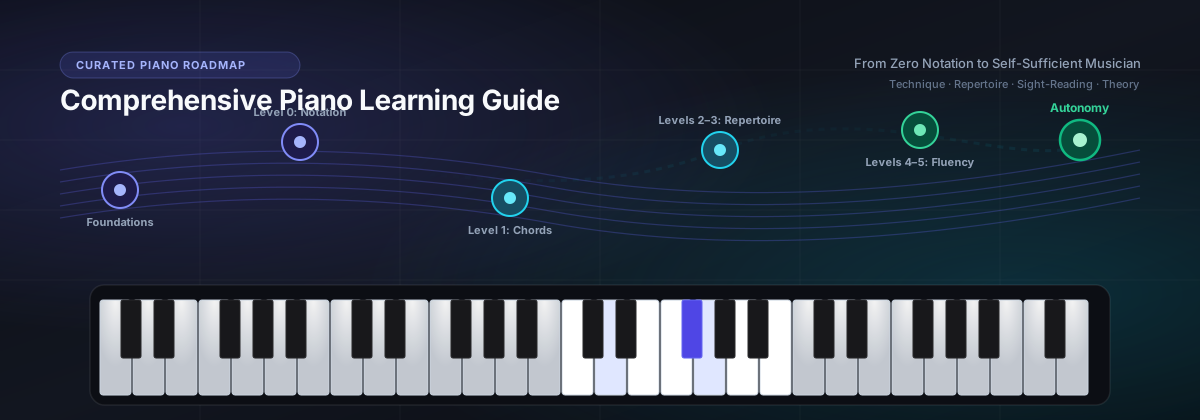
The biggest problem with learning piano as an adult is not a lack of material. There are thousands of YouTube videos, apps, and books. The problem is fragmentation: picking up five different methods at once, hitting a wall on hand independence, relying on visual memory shortcuts, and stalling out after six months.
This guide adapts the music and sight-reading roadmap originally created by Reddit contributor MrScarletOnTheMoon, paired with insights from piano teachers and adult learners on r/piano. The linked online lessons, drills, and Playsheet practice pieces can be used alongside a course. Some companion videos require a commercial method book, and linked score licenses vary by country and edition.
Levels 2 and 3 bridge the gap between beginner exercises and real literature. You leave the safety of 5-finger positions and learn how to navigate the full keyboard.
you can execute thumb crossings comfortably, play in keys with up to two sharps or flats, and learn a short graded piece in manageable sections. The time needed varies with the piece and the learner.