 playsheet
Loading is taking longer than expected.
playsheet
Loading is taking longer than expected.
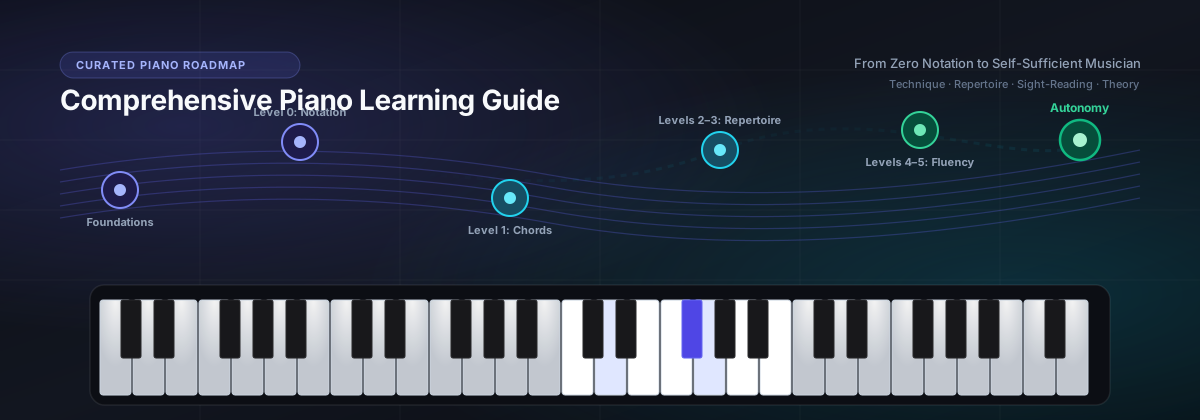
The biggest problem with learning piano as an adult is not a lack of material. There are thousands of YouTube videos, apps, and books. The problem is fragmentation: picking up five different methods at once, hitting a wall on hand independence, relying on visual memory shortcuts, and stalling out after six months.
This guide adapts the music and sight-reading roadmap originally created by Reddit contributor MrScarletOnTheMoon, paired with insights from piano teachers and adult learners on r/piano. The linked online lessons, drills, and Playsheet practice pieces can be used alongside a course. Some companion videos require a commercial method book, and linked score licenses vary by country and edition.
Level 0 is about reading intervals rather than note names. When looking at sheet music, your brain should see steps (adjacent lines/spaces) and skips (line-to-line or space-to-space, thirds) as physical hand distances.
Avoid the fixed-position trap: Many beginner books keep both hands locked in Middle C or C-Major 5-finger positions. This makes students associate "finger 1 with C" or "finger 5 with G". Break this habit immediately by shifting your hand to start on D, E, or F.
you can open an unfamiliar 8-bar Level 0 piece, sight-read it through with both hands at a slow tempo, and keep the pulse even if you hit a wrong note.